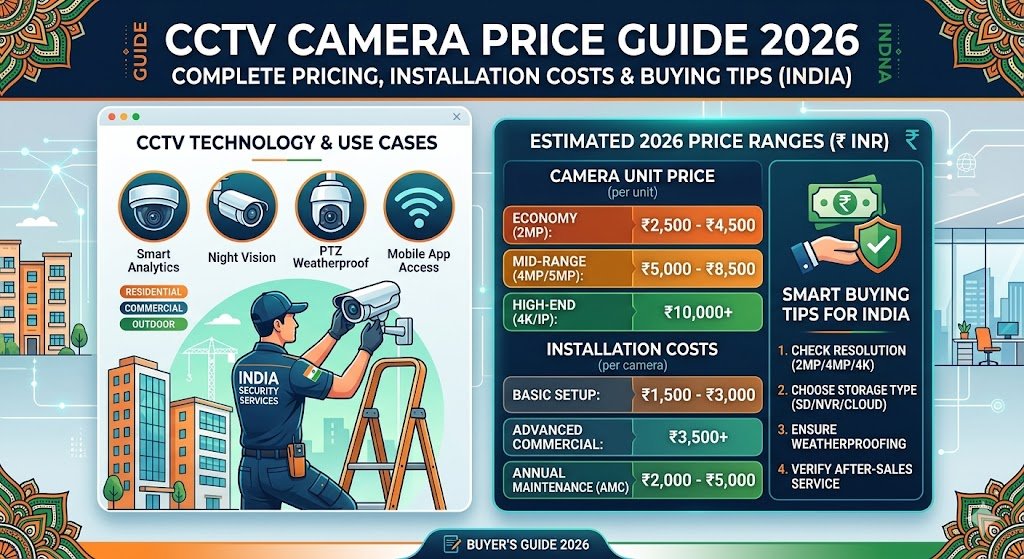
Installing a CCTV surveillance system is one of the most effective ways to improve security for homes, shops, offices, warehouses, factories, schools, and residential societies. However, the quality of your CCTV system depends not only on the cameras you purchase but also on the expertise of the installer.
Many customers focus solely on the price of cameras and overlook the importance of professional installation. A poorly installed CCTV system can result in blind spots, unclear recordings, network issues, storage failures, and costly maintenance problems later.
Whether you are planning to secure your home, retail shop, office, warehouse, or industrial facility, choosing a reliable CCTV installer is one of the most important decisions you will make.
This guide explains everything you need to know before hiring a CCTV installer and helps you avoid common mistakes that can compromise your security.
Why Choosing the Right CCTV Installer Matters
A CCTV system is more than just cameras mounted on walls. It involves:
- Security assessment
- Camera placement planning
- Cabling and networking
- Power management
- Recording setup
- Mobile viewing configuration
- Data storage planning
- Maintenance and support
Even premium cameras can deliver poor performance if installed incorrectly.
A professional installer ensures:
- Maximum coverage
- Minimal blind spots
- Proper recording quality
- Stable remote access
- Long equipment lifespan
- Faster troubleshooting
- Better return on investment
Common Problems Caused by Poor Installation
Before discussing how to choose an installer, it is important to understand the risks of hiring an inexperienced technician.
Poor Camera Placement
Many low-cost installers place cameras wherever installation is easiest rather than where coverage is most effective.
This often leads to:
- Blind spots
- Missed incidents
- Incomplete recordings
- Poor identification of people and vehicles
Incorrect Lens Selection
Different areas require different camera lenses.
For example:
- Entrance gates
- Parking areas
- Cash counters
- Warehouses
- Corridors
Using the wrong lens can result in unusable footage.
Poor Cable Quality
Cheap cables may save money initially but often create issues such as:
- Video signal loss
- Network instability
- Frequent maintenance
- Reduced camera lifespan
Improper Power Supply
Many CCTV failures occur because of poor power management.
A professional installer uses:
- Proper power supplies
- Surge protection
- UPS backup systems
Lack of After-Sales Support
Some installers disappear after completing the installation.
When problems occur, customers struggle to get assistance.
Step 1: Check Experience and Industry Knowledge
One of the first factors to evaluate is experience.
Ask the installer:
- How many years have you been in business?
- What types of projects have you completed?
- Have you handled installations similar to mine?
An installer who has completed hundreds of installations is usually more capable of handling challenges than someone new to the industry.
Look for experience in:
- Residential installations
- Commercial projects
- Industrial facilities
- Educational institutions
- Healthcare facilities
The more diverse their experience, the better.
Step 2: Verify Business Credentials
A professional CCTV installer should operate as a legitimate business.
Check whether they have:
- GST registration
- Business registration
- Physical office
- Website
- Company email address
- Customer support number
Reliable businesses invest in their reputation and are more likely to provide long-term support.
Avoid dealing with installers who only operate through temporary mobile numbers and social media profiles.
Step 3: Ask for References and Previous Work
A trustworthy installer should be willing to share examples of previous projects.
Ask for:
- Installation photographs
- Client references
- Customer testimonials
- Google reviews
- Project case studies
If possible, speak with existing customers.
Questions to ask previous customers:
- Was the installation completed on time?
- Did the installer provide proper training?
- Was after-sales service satisfactory?
- Were there any hidden charges?
Real customer feedback provides valuable insights.
Step 4: Evaluate Their Security Assessment Process
Professional installers do not recommend equipment immediately.
Instead, they first assess:
- Entry points
- Vulnerable areas
- Lighting conditions
- Existing infrastructure
- Network availability
- Security objectives
A proper site survey helps determine:
- Number of cameras required
- Camera locations
- Storage requirements
- Recording duration
- Network design
Be cautious if someone provides a quotation without understanding your site.
Step 5: Understand the Brands They Offer
Reliable installers typically work with established CCTV brands.
Good installers explain:
- Differences between brands
- Product warranties
- Feature comparisons
- Budget options
They should recommend products based on your requirements rather than simply pushing the highest-priced option.
A trustworthy installer focuses on value rather than commission.
Step 6: Review the Quotation Carefully
Never choose an installer solely because they offer the lowest price.
Compare quotations based on:
Equipment Specifications
Check:
- Camera resolution
- Storage capacity
- Recorder specifications
- Warranty period
Installation Charges
Understand:
- Labour costs
- Cable costs
- Accessories
- Network setup charges
Hidden Costs
Ask whether the quotation includes:
- GST
- Transportation
- Mounting accessories
- Mobile app configuration
- User training
Transparent pricing is a sign of professionalism.
Step 7: Evaluate Technical Expertise
Modern CCTV systems are network-based and require advanced technical knowledge.
Your installer should understand:
IP Cameras
Knowledge of:
- IP addressing
- Network configuration
- Bandwidth management
Mobile Viewing
They should configure:
- Smartphone access
- Remote monitoring
- User permissions
Cloud Integration
Many businesses now require cloud storage and remote backups.
Cybersecurity
Security cameras connected to the internet can become vulnerable if improperly configured.
Professional installers understand:
- Password security
- Firmware updates
- Secure remote access
Step 8: Ask About Warranty Support
A reliable installer clearly explains warranty terms.
Ask:
- What is covered under warranty?
- What is excluded?
- How long is the warranty period?
- Who handles warranty claims?
Some installers expect customers to contact manufacturers directly.
Others manage the complete warranty process.
The second option is usually more convenient.
Step 9: Understand Maintenance Services
Like any technology system, CCTV requires periodic maintenance.
Ask whether they offer:
Annual Maintenance Contracts (AMC)
AMC services may include:
- Camera cleaning
- Recording verification
- System health checks
- Cable inspection
- Firmware updates
Emergency Support
Find out:
- Response times
- Service charges
- Availability during holidays
Reliable support reduces downtime significantly.
Step 10: Assess Communication and Professionalism
The way an installer communicates often reflects their work quality.
Professional installers:
- Respond promptly
- Explain solutions clearly
- Provide written quotations
- Document recommendations
- Maintain transparency
Poor communication before installation often leads to bigger problems afterward.
Step 11: Ask About Future Scalability
Your security needs may grow over time.
A good installer designs systems that allow future expansion.
Examples:
- Additional cameras
- More storage
- Access control integration
- Video analytics
- Alarm integration
Planning ahead can save substantial costs later.
Step 12: Check Response Time for Service Calls
Equipment failures can occur unexpectedly.
Ask:
- How quickly do you attend service calls?
- Do you provide remote support?
- What are your support hours?
Businesses particularly need fast support because surveillance downtime can create security risks.
Red Flags to Watch Out For
Avoid installers who:
Offer Extremely Low Prices
Very low pricing often means compromises in:
- Equipment quality
- Cable quality
- Installation standards
- Support services
Refuse Site Visits
Professional installers usually inspect the site before finalizing recommendations.
Lack Documentation
Avoid providers who do not provide:
- Quotations
- Invoices
- Warranty documents
Push Only One Brand
A reliable installer recommends solutions based on customer needs rather than brand incentives.
Have No Online Presence
While not mandatory, a professional website and customer reviews increase credibility.
Questions to Ask Before Hiring a CCTV Installer
Use this checklist:
- How many years have you been installing CCTV systems?
- Can you provide references?
- Which brands do you recommend?
- What warranty is included?
- Do you provide AMC services?
- Will you conduct a site survey?
- Can the system be viewed on mobile devices?
- What storage capacity do you recommend?
- How long will installation take?
- What support is available after installation?
The answers will help identify serious professionals.
Home CCTV Installation vs Business CCTV Installation
Home Installations
Typically focus on:
- Main entrance
- Parking area
- Backyard
- Staircase
- Terrace
Key priorities:
- Ease of use
- Mobile viewing
- Affordable maintenance
Business Installations
Often require:
- Multiple cameras
- Central monitoring
- Long-term storage
- User access controls
Key priorities:
- Reliability
- Scalability
- Fast service support
Choose an installer experienced in your specific application.
Benefits of Hiring a Professional CCTV Installer
When you choose the right installer, you gain:
Better Security Coverage
Strategic camera placement improves surveillance effectiveness.
Higher Image Quality
Professional configuration ensures clear footage.
Reduced Maintenance Costs
Quality installation prevents recurring issues.
Faster Problem Resolution
Experienced installers diagnose issues quickly.
Peace of Mind
Knowing your system is properly installed allows you to focus on your business and family.
Final Thoughts
A CCTV system is an investment in safety, security, and peace of mind. However, even the best cameras cannot compensate for poor installation.
When selecting a CCTV installer, focus on experience, technical expertise, customer support, transparency, and long-term reliability rather than simply choosing the lowest quotation.
Take time to verify credentials, review previous work, ask the right questions, and understand warranty and maintenance policies.
A reliable CCTV installer becomes a long-term security partner who helps protect your property, employees, customers, and loved ones.
If you are looking for trusted CCTV professionals in your city, use CCTVDealers.in to connect with verified CCTV dealers and installers near you and receive expert guidance for your security requirements.